Zone: Emotion-sensitive Smartband
Exploring the benefits of “low-tech” interfaces in an increasingly digitized landscape.
Skills — Product Design / User Research & Testing / 3D modeling
TOOLS — Adobe Illustrator / Adobe Indesign / Rhino
Overview
A kid-friendly wearable for teaching emotional regulation
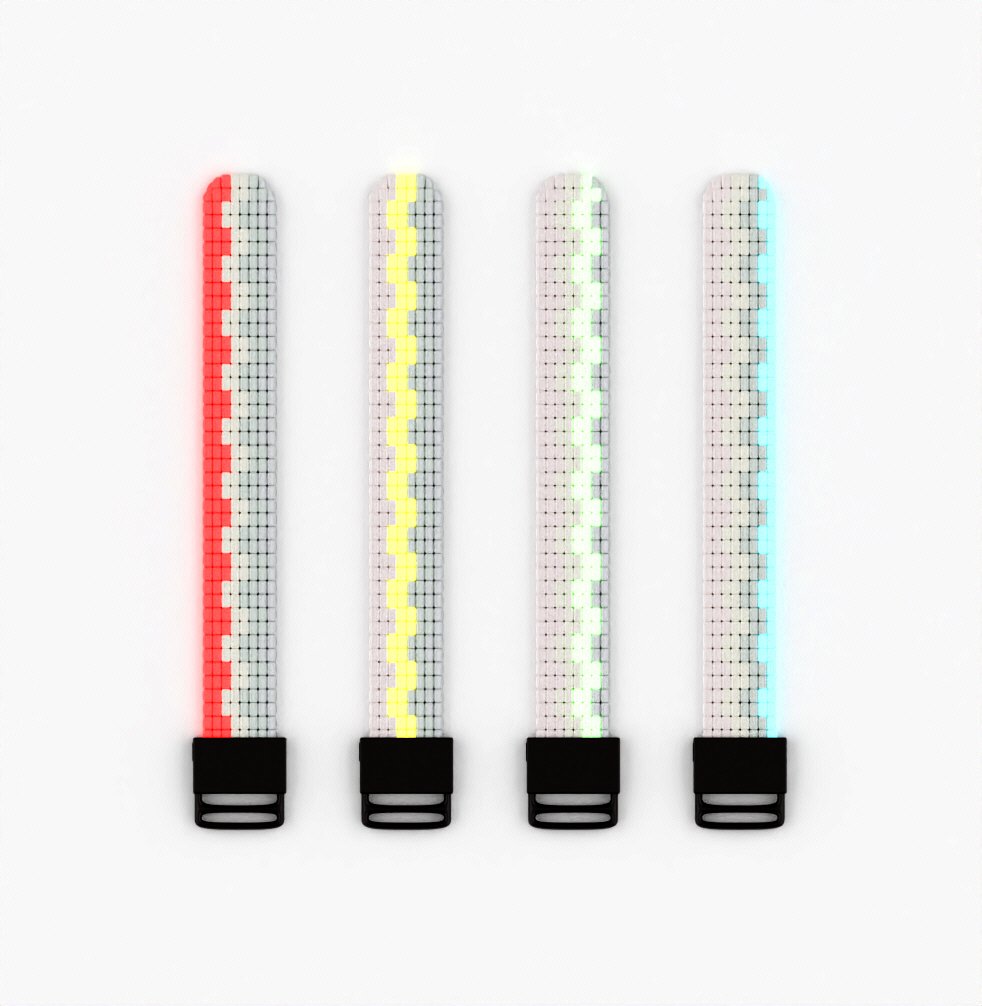
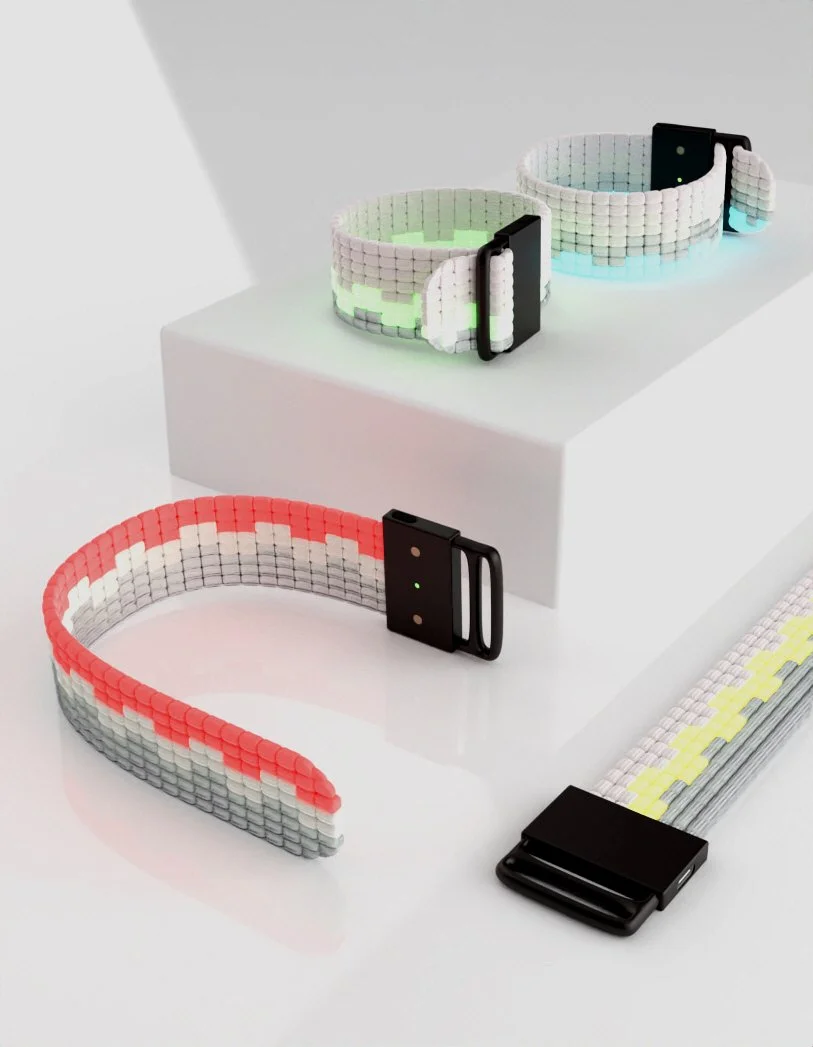
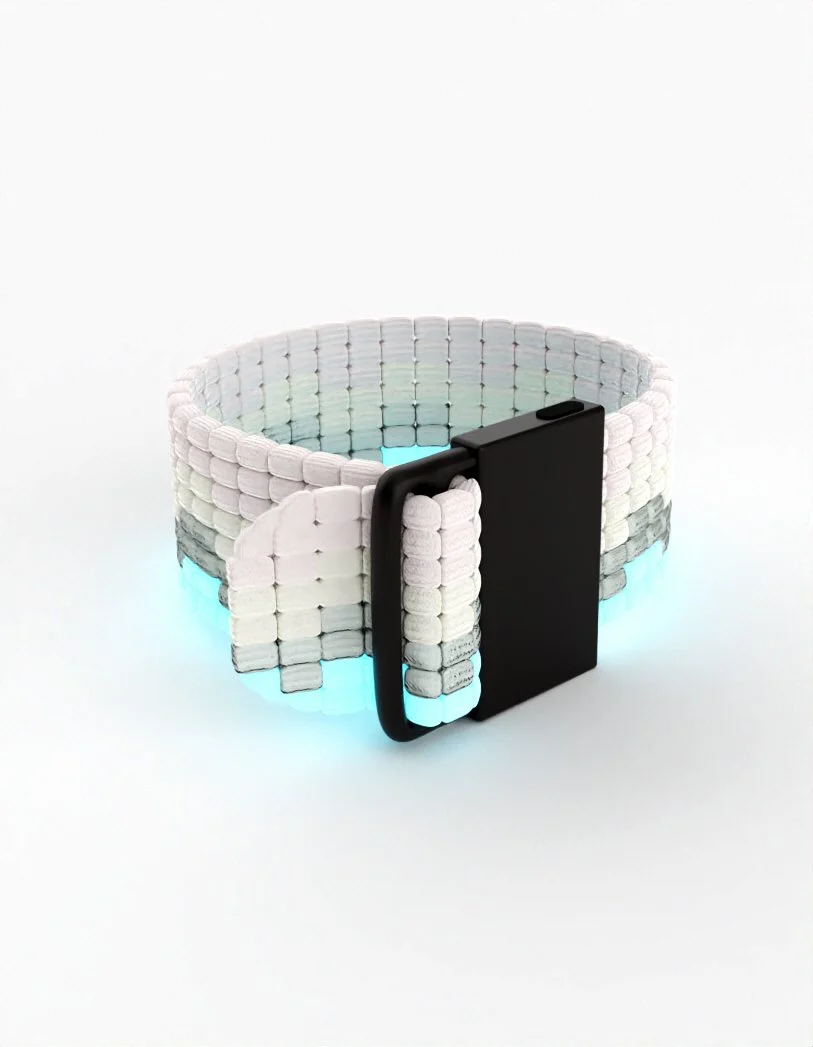
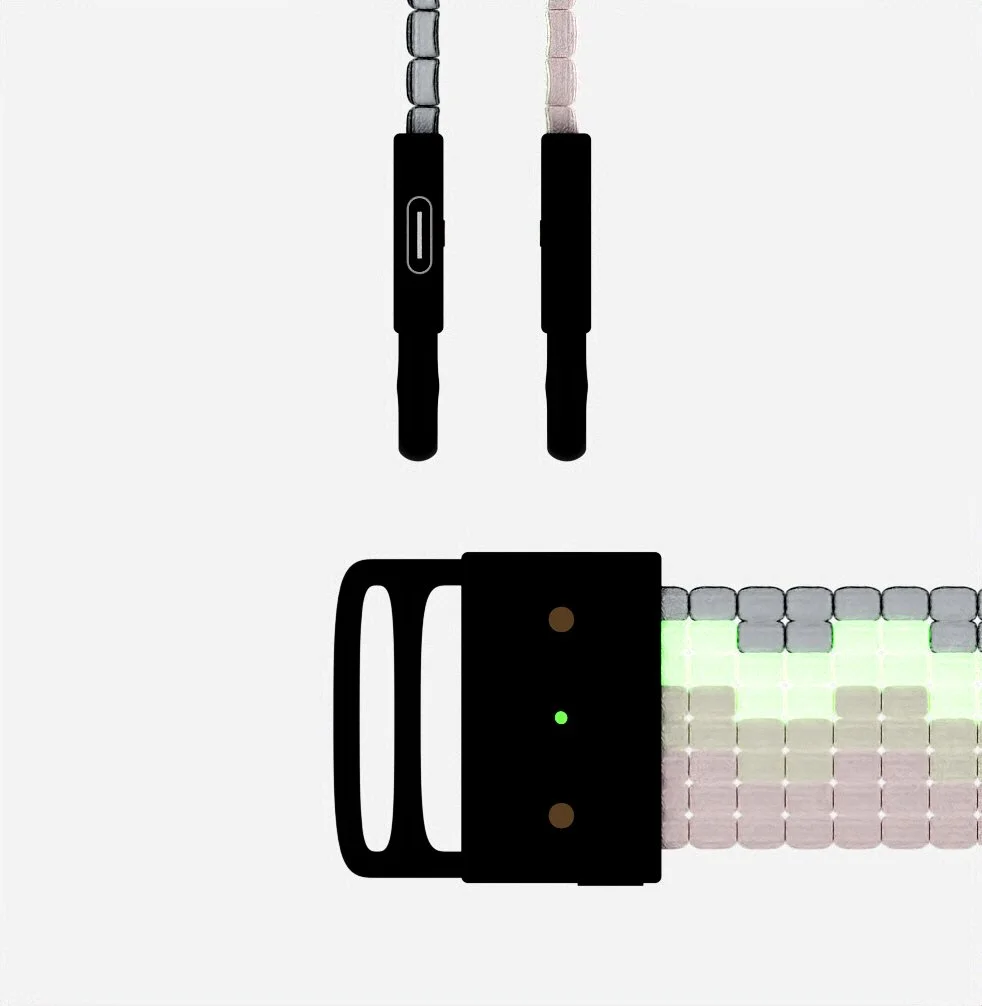
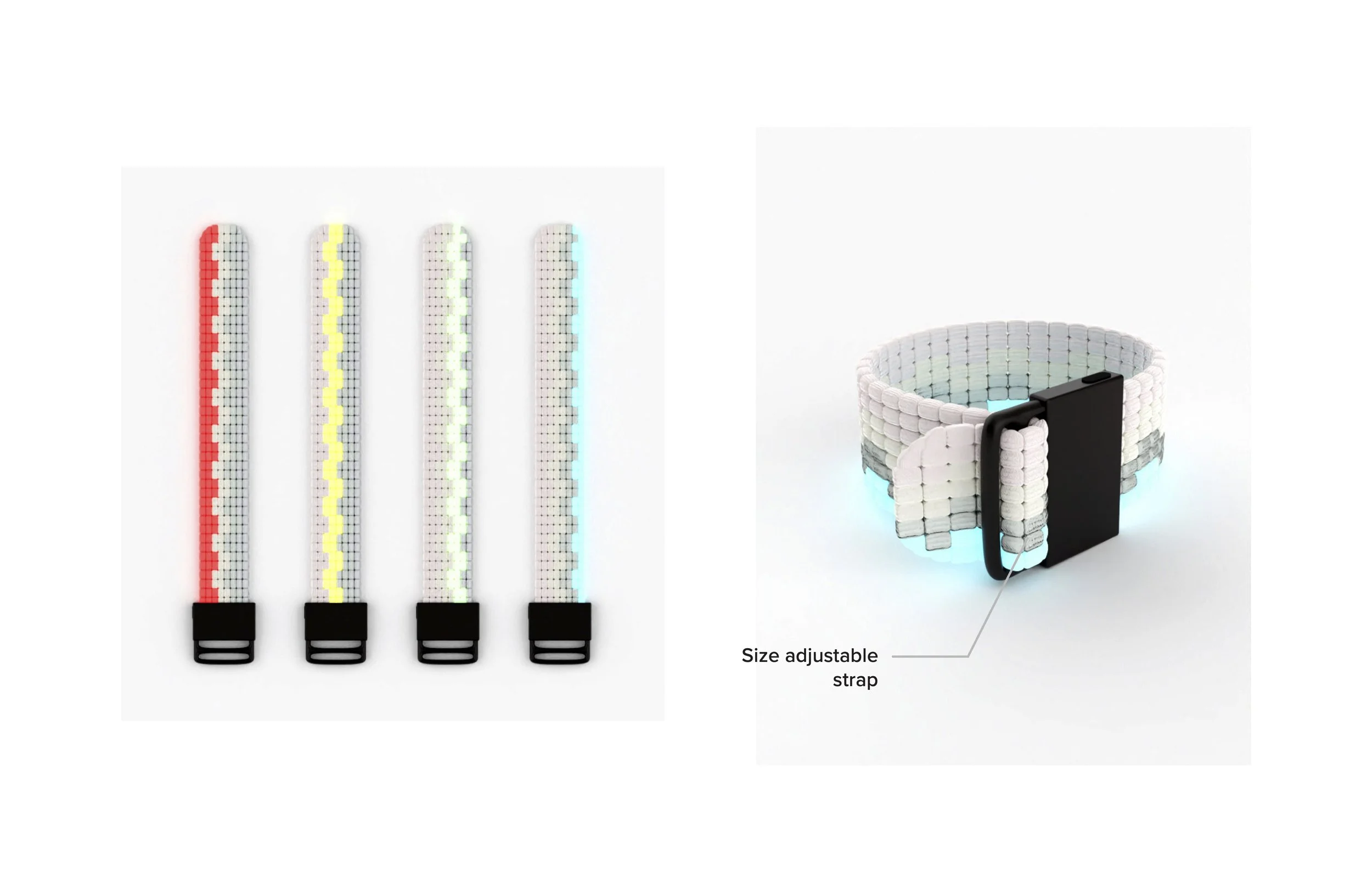
Zone is a smartband that uses electroluminescent yarn to indicate changes in emotion. With Zone, elementary-aged children (6-12) who might have difficulty with emotional regulation can visualize and reinforce their understanding of their emotional changes, and then reflect and respond accordingly. As smartwatches have saturated the landscape of wearable tech, Zone proposes a “low-tech” alternative for the classroom, where “high-tech” interfaces like screens could be more distracting than beneficial.
Task
Designing new applications for responsive material innovation
This project was created as part of a materials-driven innovation course at RISD that explored responsive materials with advanced properties. The objective was to design potential applications for these newer materials.
The key benefit I chose to focus on in this study is the potential for low-tech interfaces, a middle ground that embraces the integration of smart material and digital archiving while addressing concerns for the youth and their increasing screen time.
Background
Zones of Regulation and how we teach emotional regulation
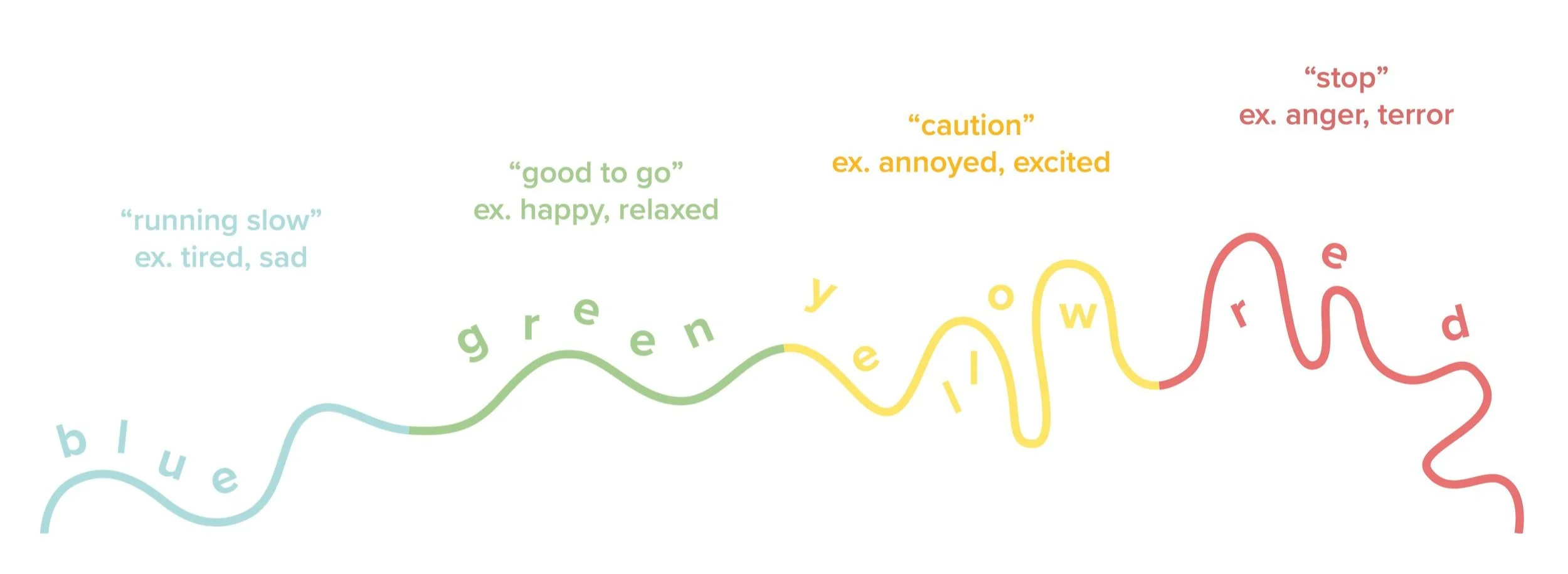
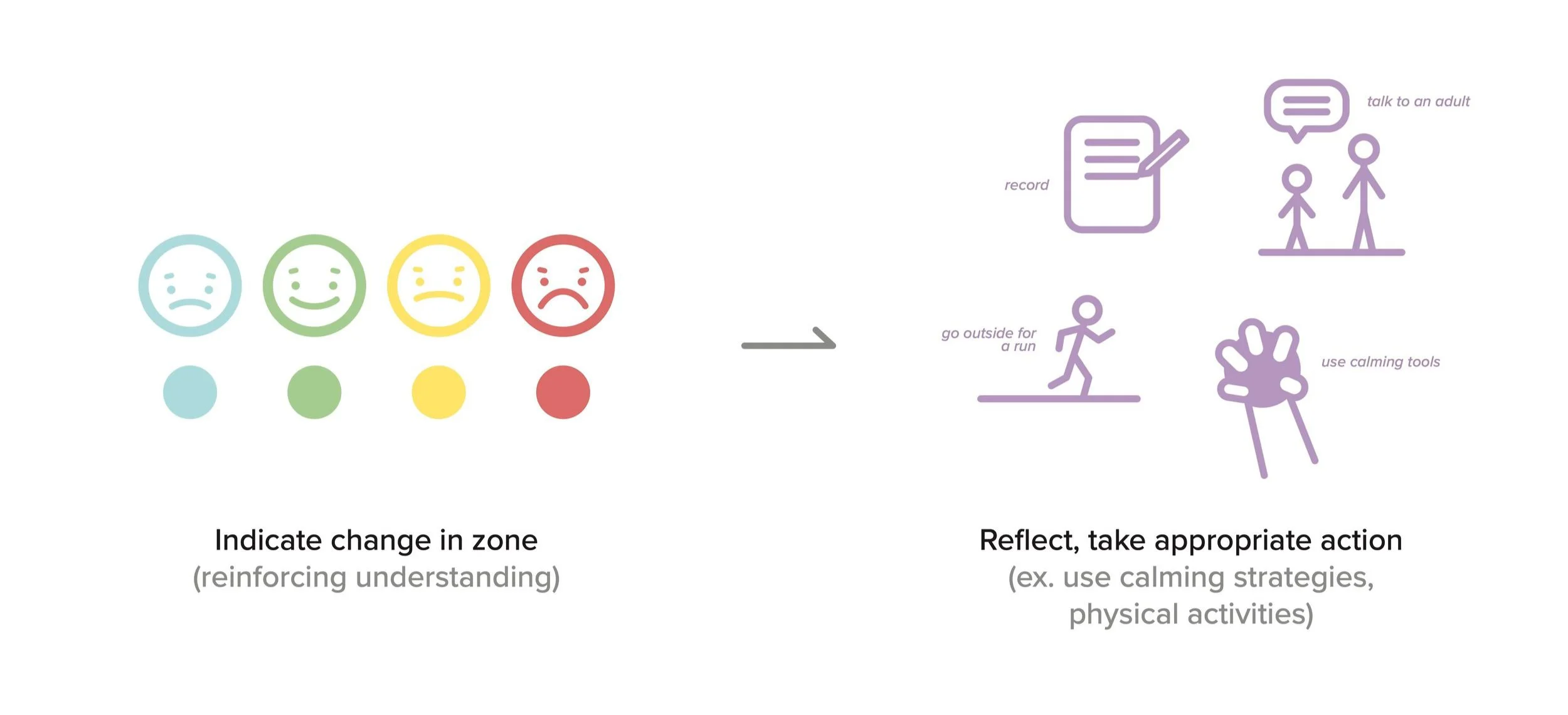
The Zones of Regulation is a metacognitive framework that categorizes emotional zones into four distinct colors: blue, green, yellow, and red. The ideal zone is green, where one feels the most "in control," and the other colors represent stages of de-escalation or escalation in which different strategies can be used to regulate emotional response.
Current methods of utilization
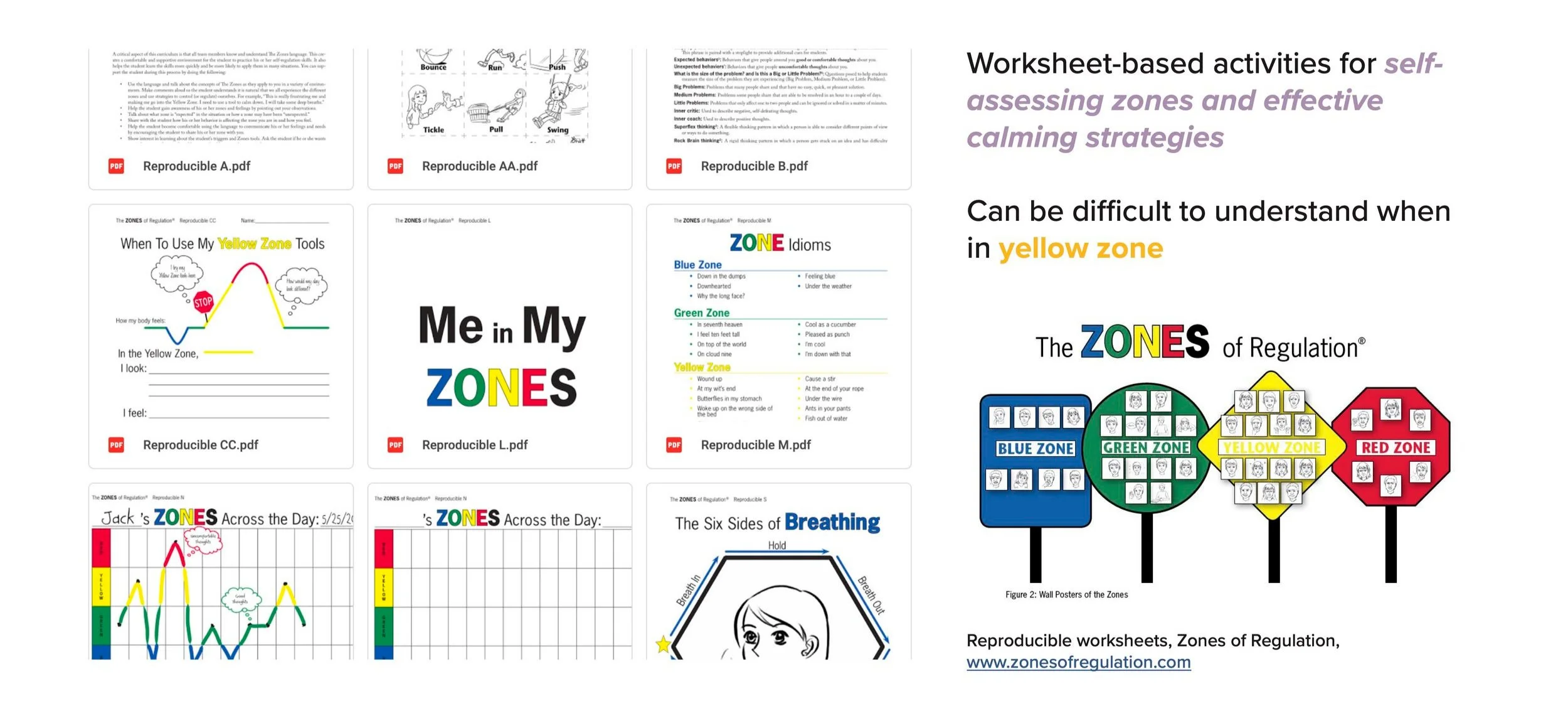
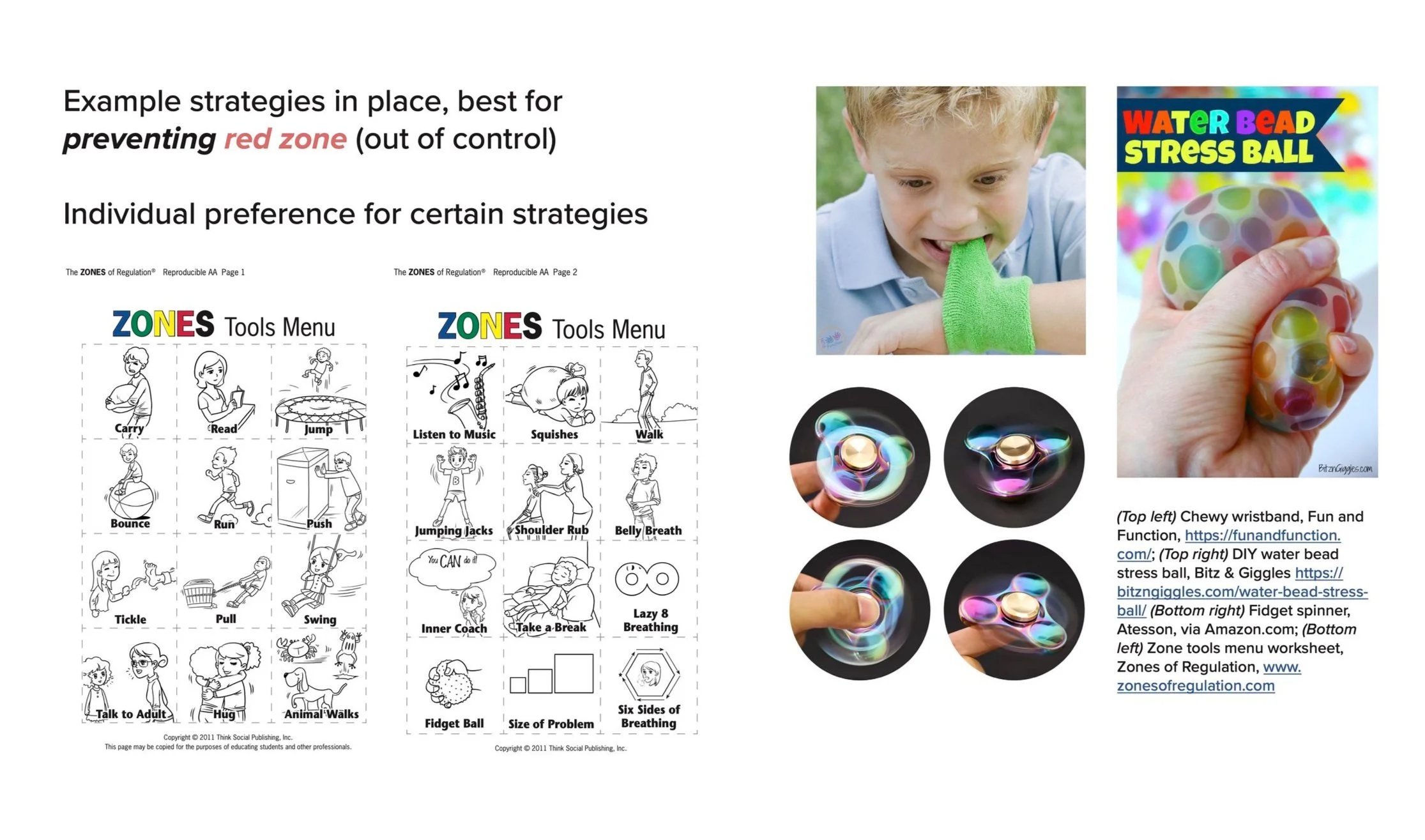
School psychologists, educators, and parents go through teaching materials with young children. Materials include reproducible worksheets and sorting activities that identify the four emotional zones.
Discovery
Ambiguity between extremes
One main difficulty was in identifying and differentiating zones for young children. Resources were too removed from their experience to communicate differences in zones except at extremes. In particular, the yellow zone was described as the most difficult to recognize compared to the other zones, but also as the most critical for self-awareness and the introduction of de-escalation strategies. Once in the red zone, kids might feel the most "out-of-control" with their emotions and unable to de-escalate.
Challenge
How might we utilize smart material to help identify the Zones of Regulation and respond to emotional changes?
Approach
Identify, De-escalate, Learn
Based on the challenges observed in the current method of utilization, I identified two main design goals:
Assist in the teaching of the Zones of Regulation by improving the clarity of changes in emotion
Aid in the self-assessment of emotional changes for more proactive self-regulation
Identifying Key groups
Elementary-aged children (6-12) who who struggle with self-emotional regulation and want to build independence, especially in settings where 1-on-1 attention is limited
As a student, I want to better understand my emotions so that I can better communicate my needs and recognize when to use self-regulating practices.Parents/guardians who need support at home in teaching and reinforcing emotional regulation education
As a parent/guardian, I want to better support my child in understanding their emotions so that they can self-regulate and communicate their needs in and out of the home.
Teachers who need support in classrooms and want to reduce distractions from learning
As a teacher, I want to more efficiently meet each student’s needs so that I can teach in a safe and fair environment.
materials research
From general research, we could identify several types of responsive materials that visually indicate changes (physical or chemical). These included chemochromic (color changes in response to chemical changes), thermochromic (color changes in response to heat), electrochromic (color changes in response to electricity), and polymorphic (physical changes in response to physical disruptions).
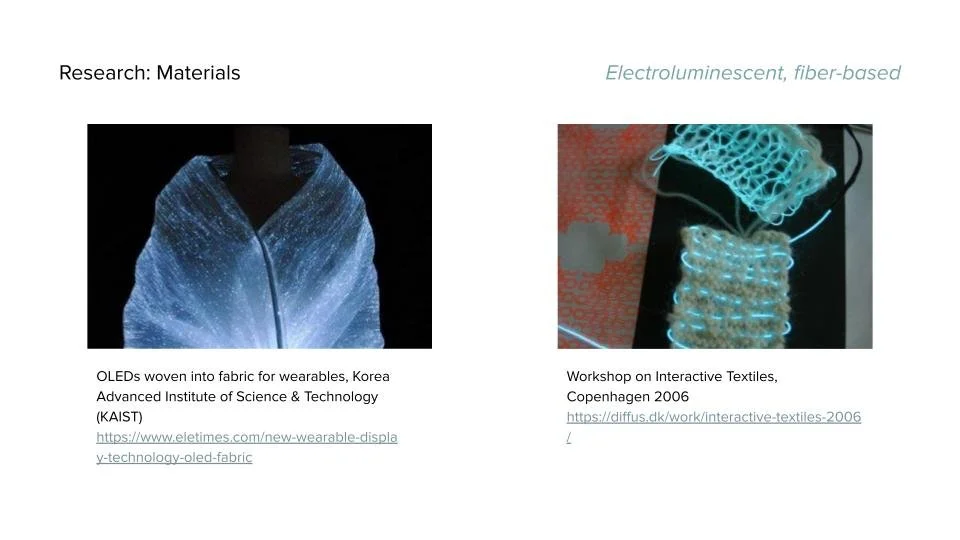
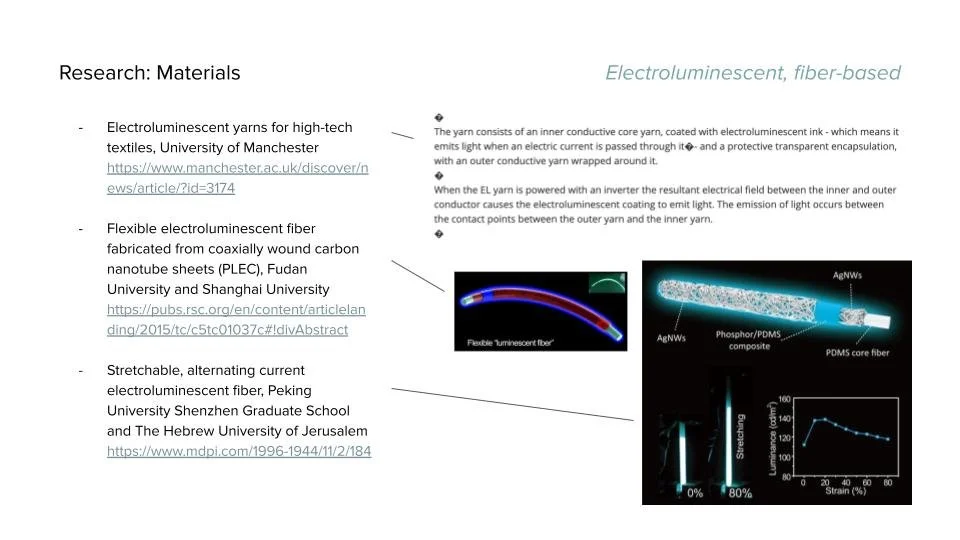
Ultimately, the low-energy demand and precedence of wearable applications of electroluminescent materials (luminescence in response to electricity) narrowed down the research to fiber-based electroluminescents.
Material choices and iterations
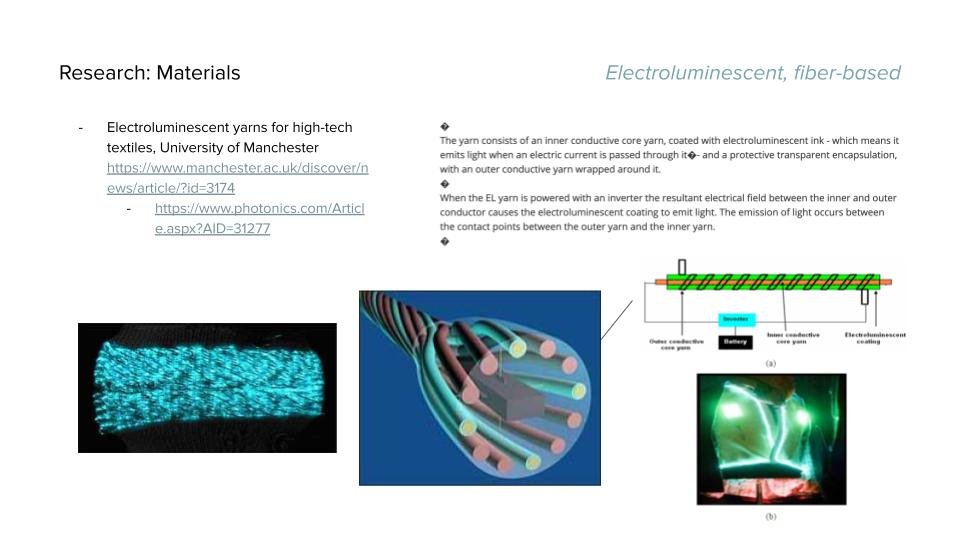
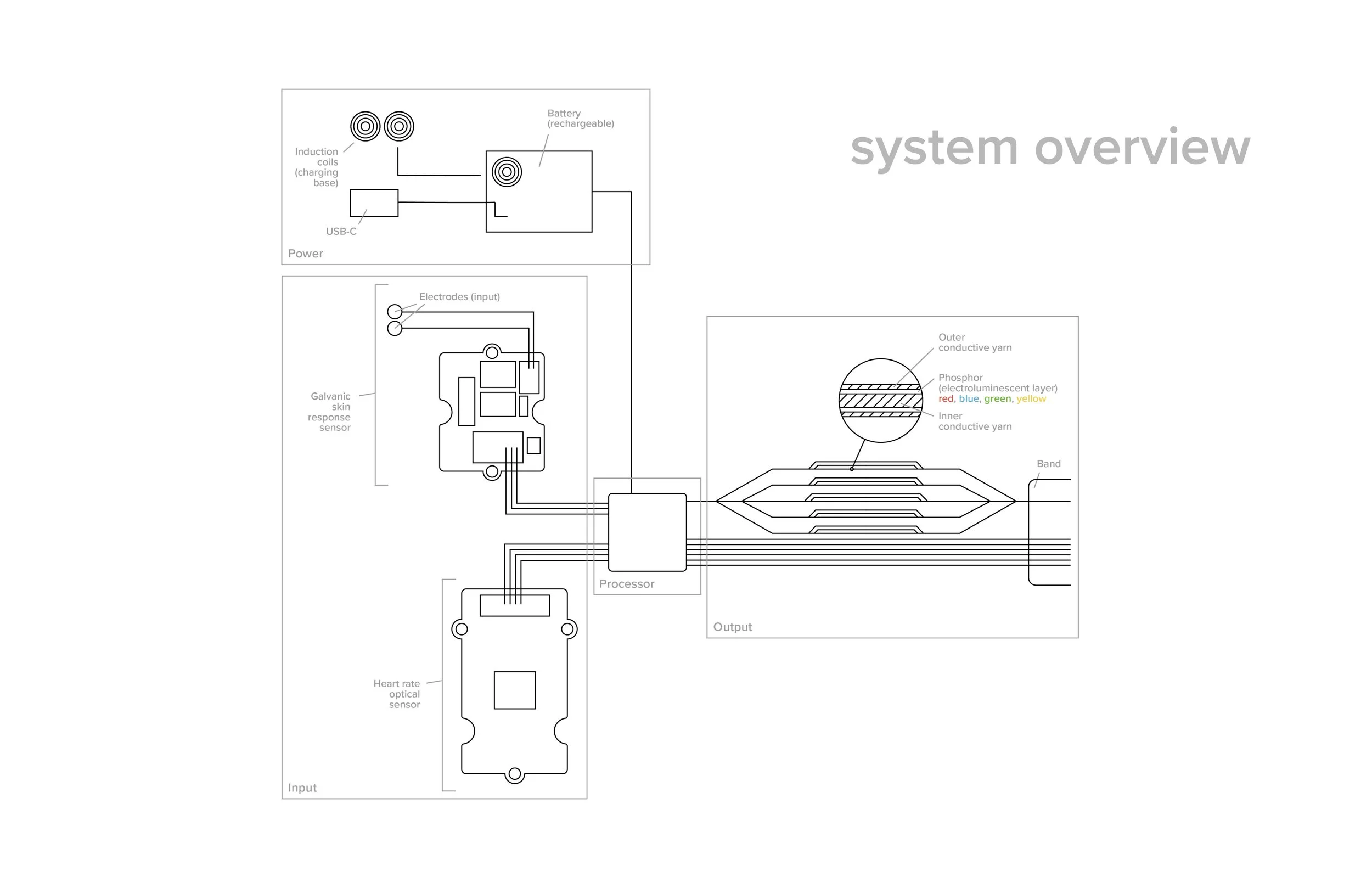
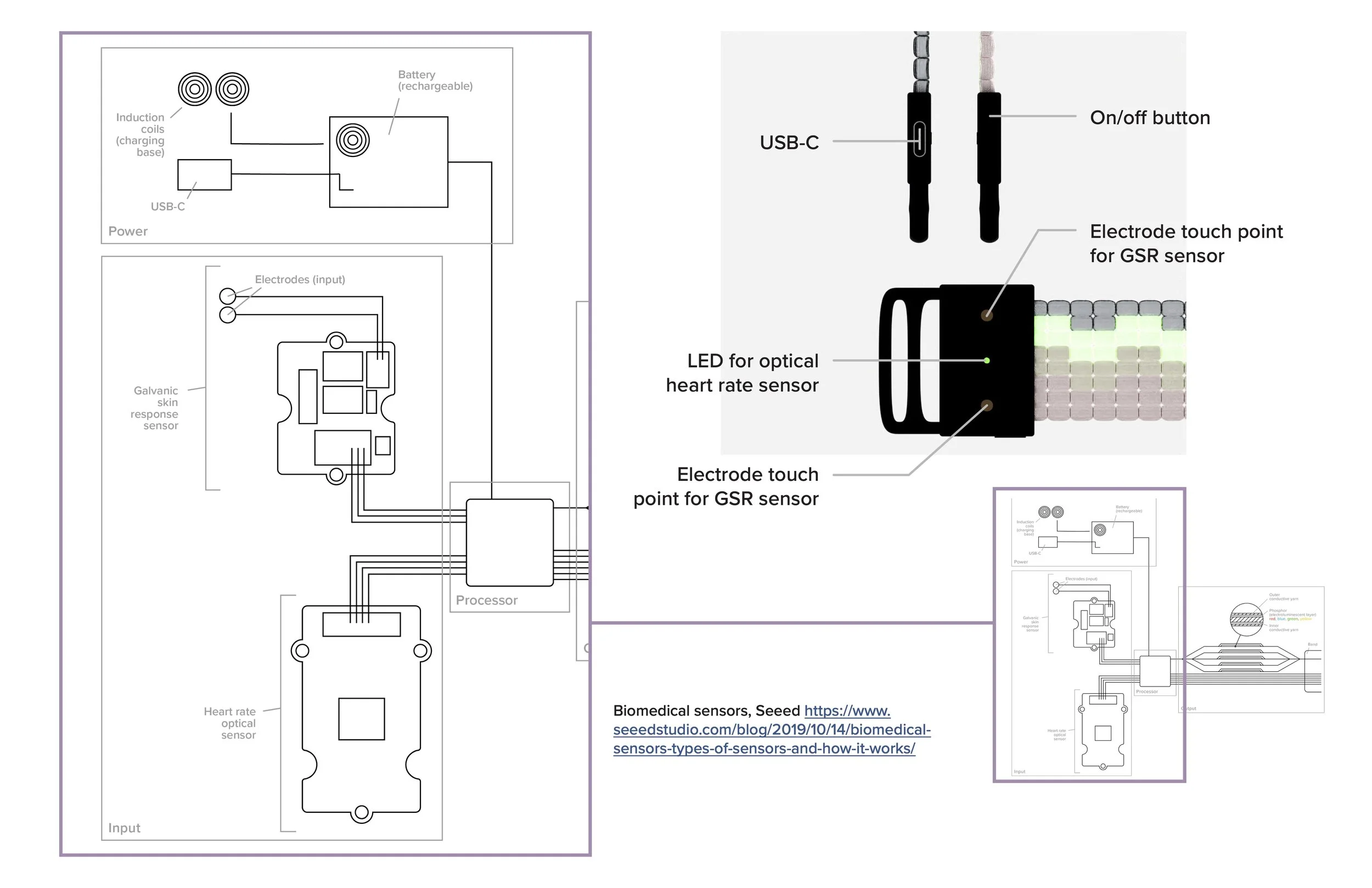
In this project, I focus on the use of electroluminescent yarns developed by the University of Manchester. The possibility of varied color luminescence allows responses to correspond to the Zones of Regulation.
Key benefits of EL yarn:
Structural durability as woven material > ideal for kids
Integrating multicolor changes throughout the material
Clear main function, less distracting than a smartwatch
Familiar "low-tech" form is more comfortable + decreases the risk of ostracization
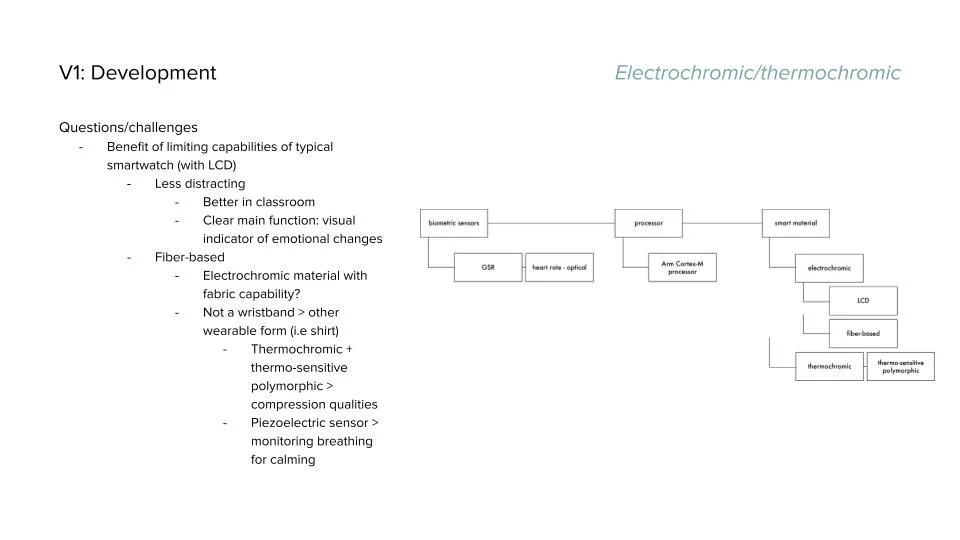
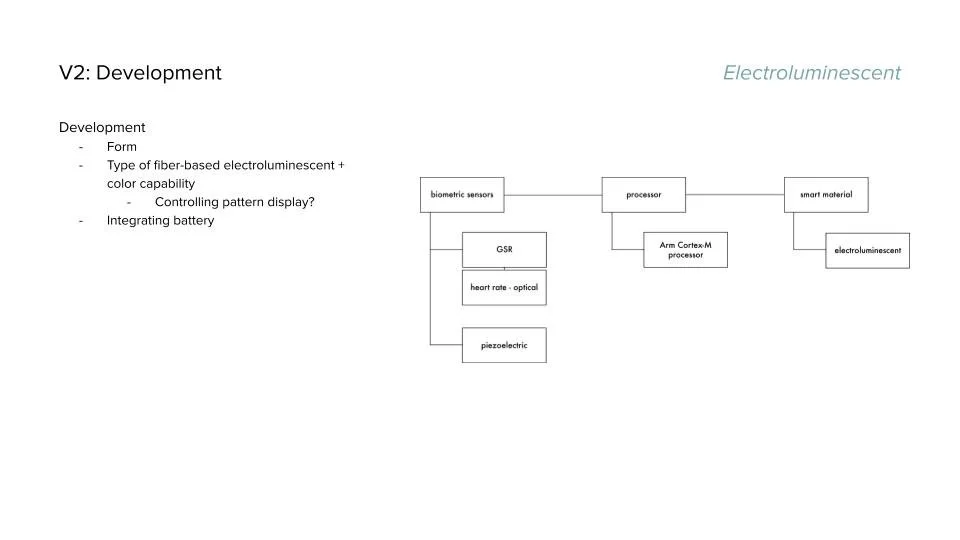
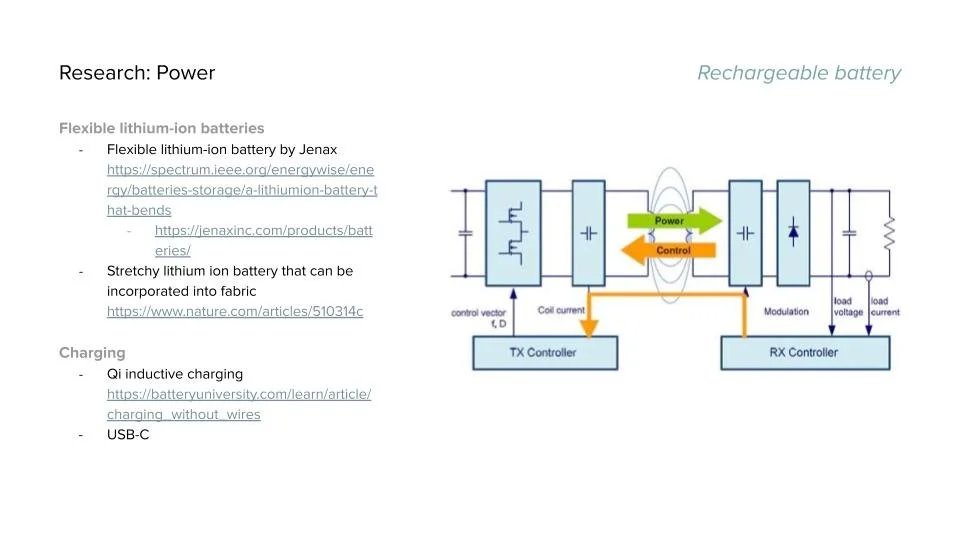
After refining the design of the overall system, I decided on the form of a wristband based on precedence of smartwatches as a familiar, relatively low-profile wearable that integrates biometric sensors.
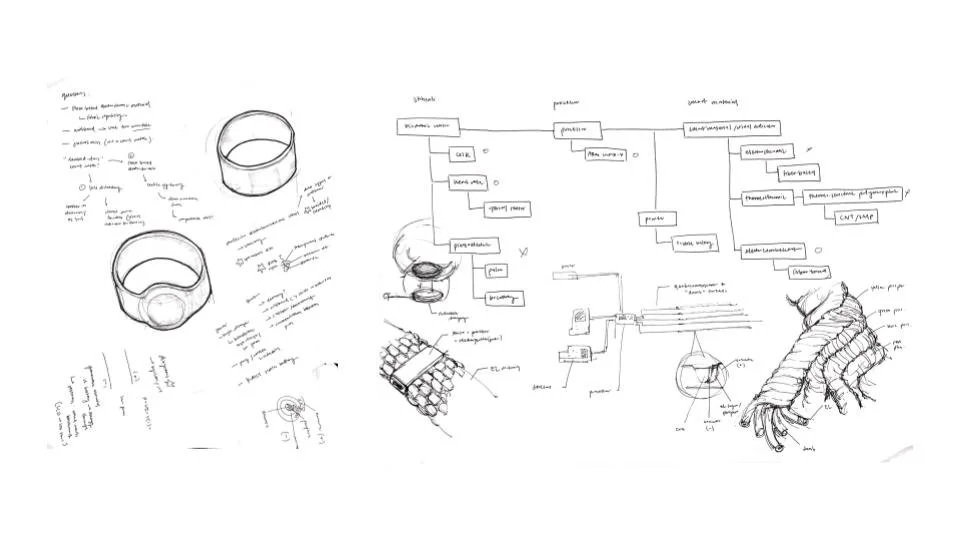
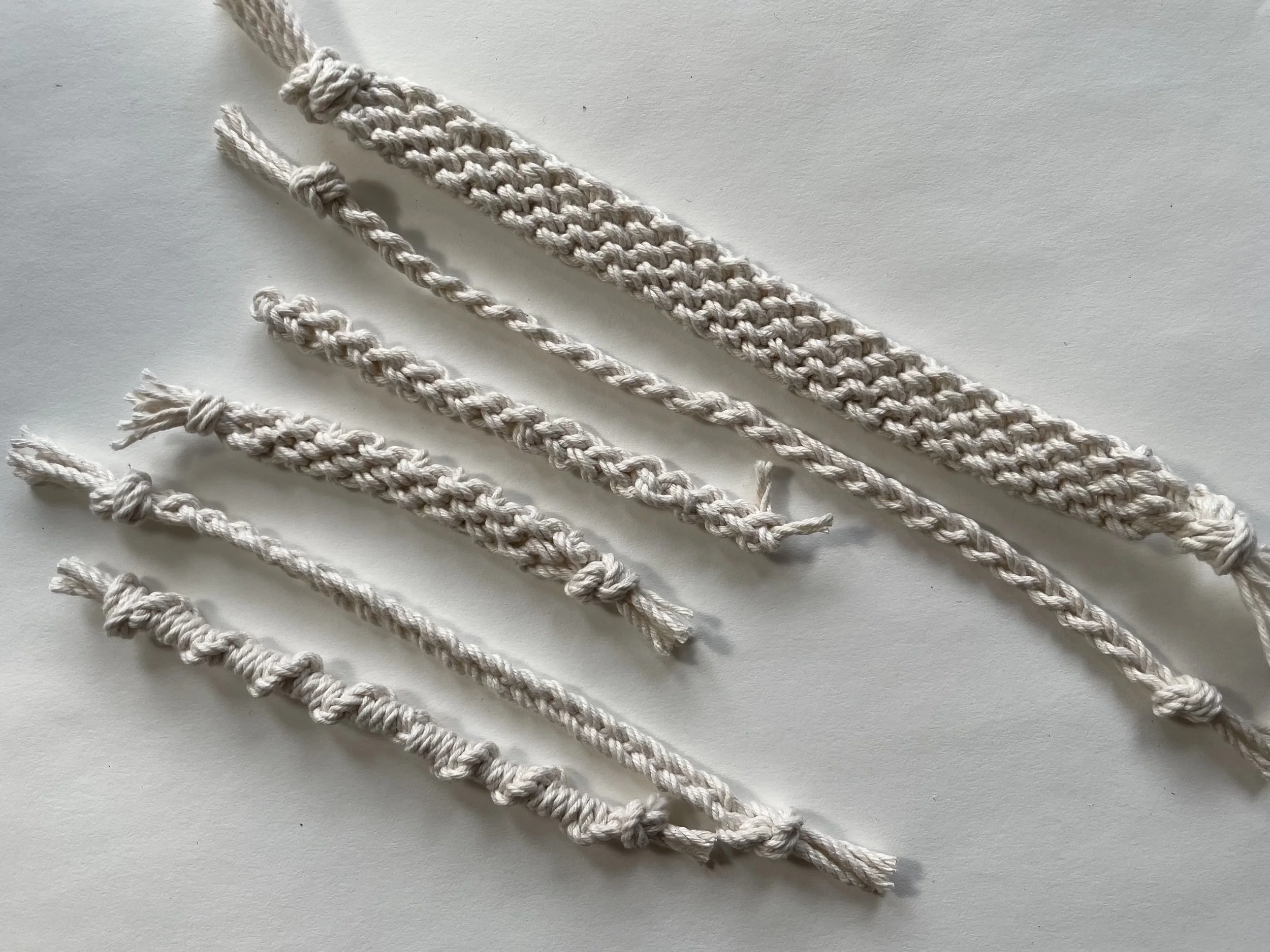
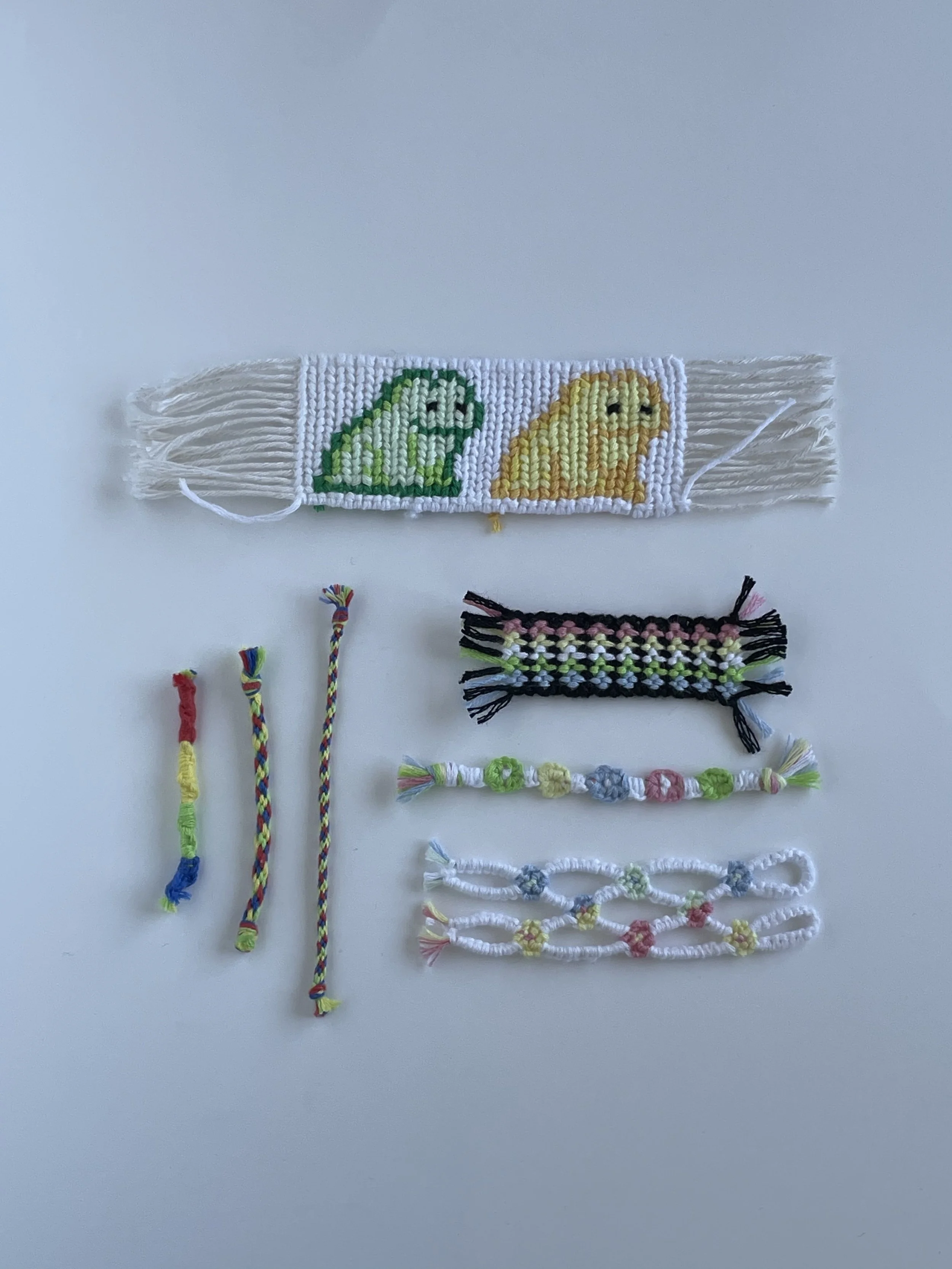
Since the key user of the wristband were young children, I explored potential designs that leaned into the low-tech appearance of the smart material, including friendship bracelets.
Solution
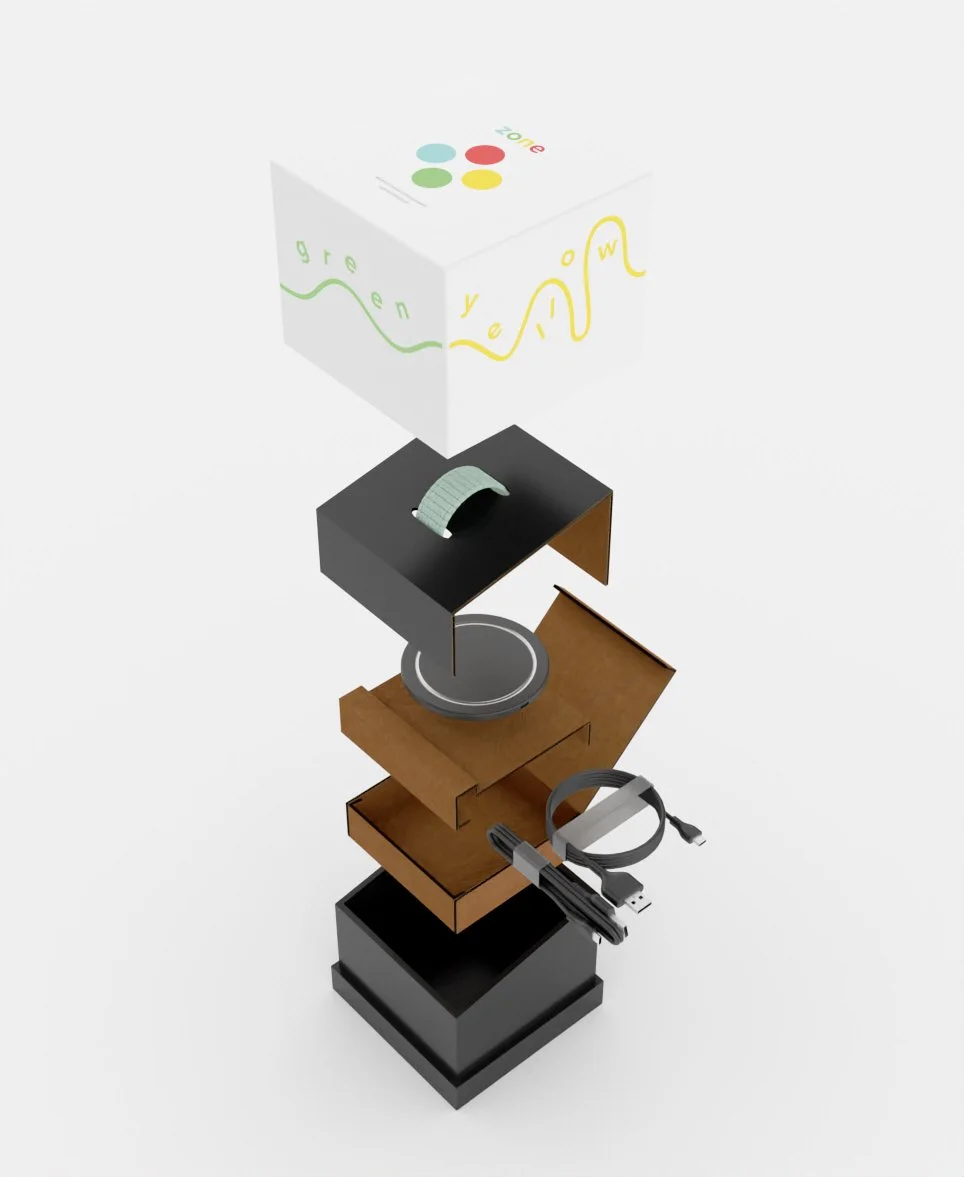
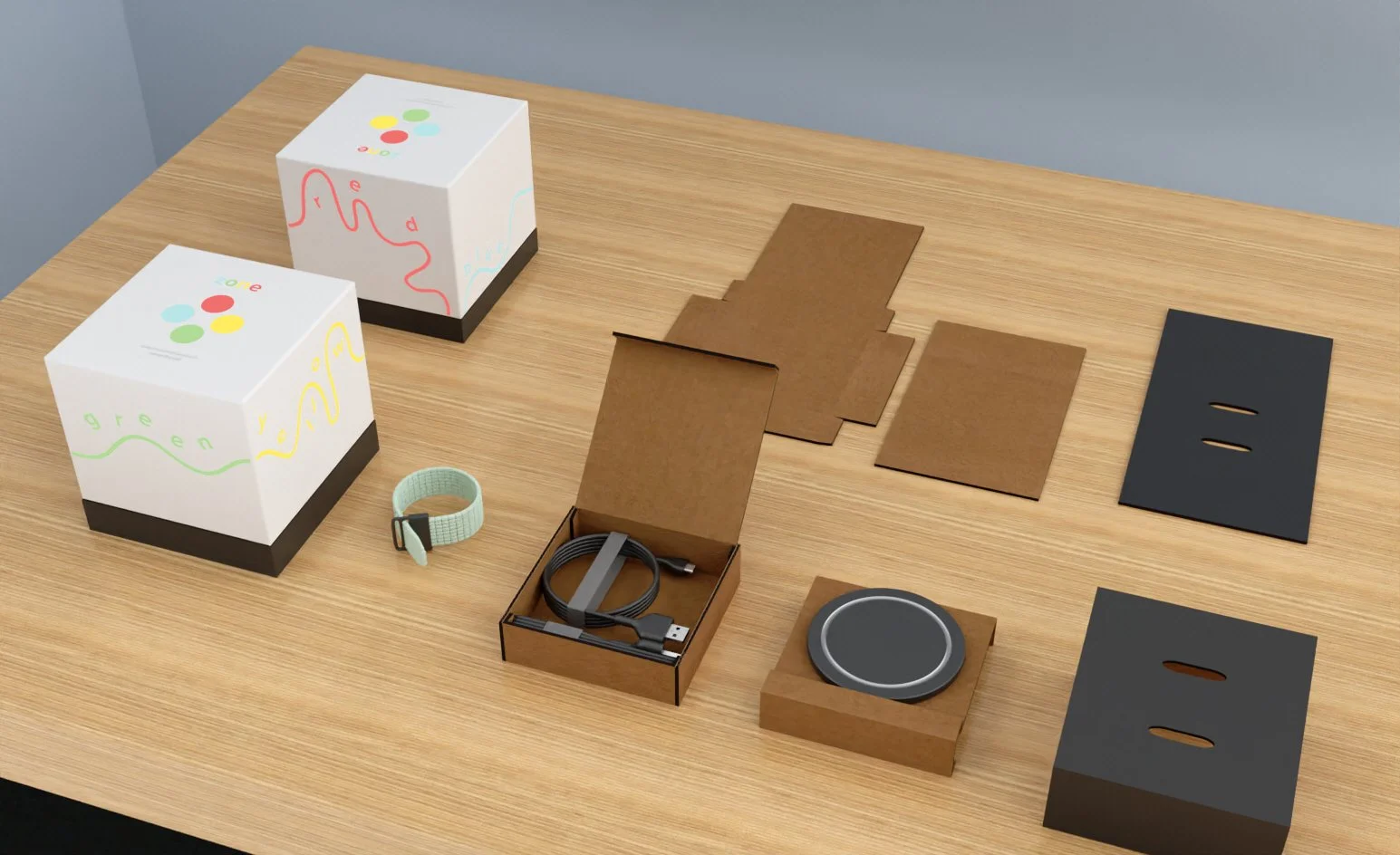
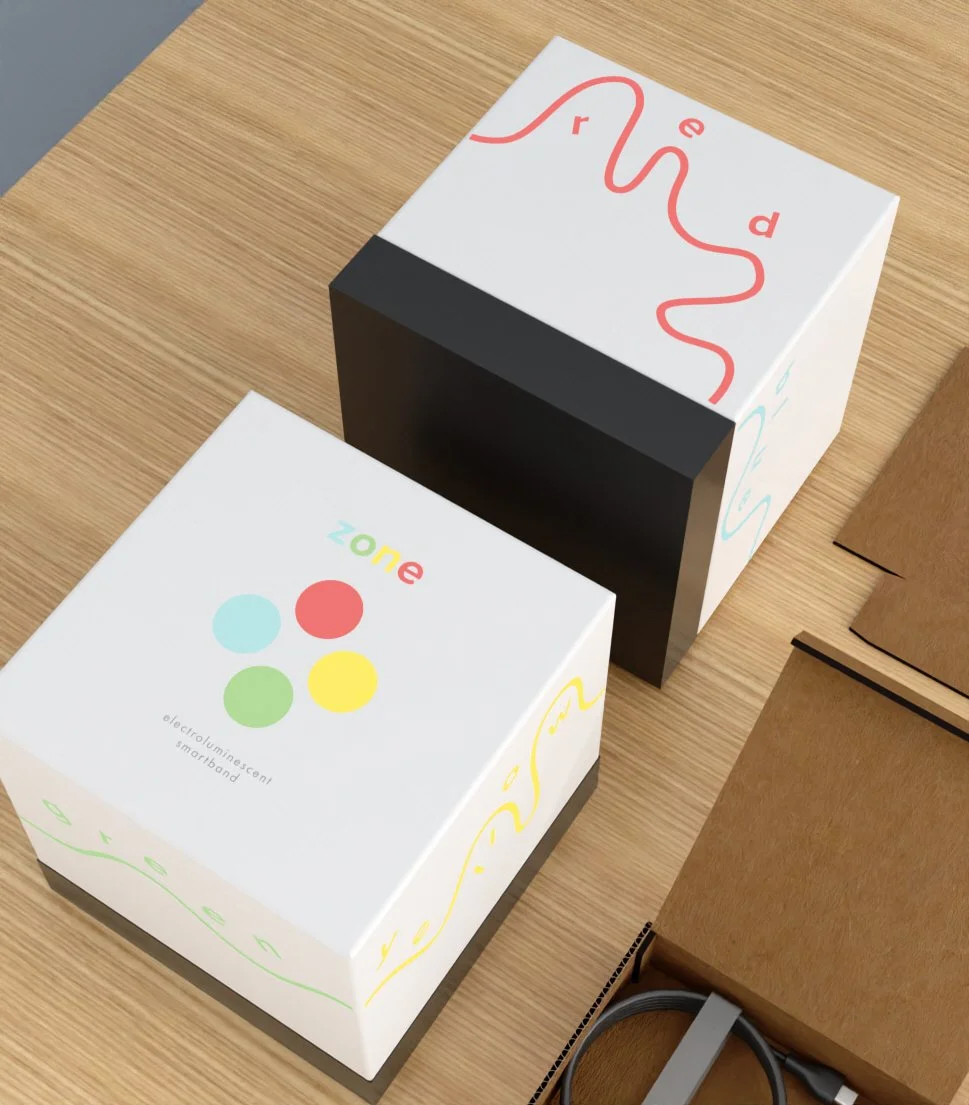
Zone Final Concept and system
Future considerations and next steps
Material testing: Checking color visibility, pattern testing and weaving samples
User testing with target groups: Current age group (elementary school children), other potential groups and needs (young, nonverbal children), adjacent target groups (parents/guardians, teachers)
IOT development: App development, UI/UX prototyping, stored data, and summarized reports